Prevent Disease

Probiotics for weight loss

Gut Bacteria May Affect Body Weight Regulation

There are hundreds of different microorganisms in your digestive system. The majority of these are bacteria, most of which are friendly. Friendly bacteria produce several important nutrients, including vitamin K and certain B-vitamins. They also help break down fiber that the body can’t digest, turning it into beneficial short-chain fatty acids like butyrate.

Both human and animal studies have found that normal-weight people have different gut bacteria than overweight or obese people. In those studies, people with obesity had more firmicutes and fewer bacteroidetes, compared to normal-weight people. There are also some animal studies showing that when the gut bacteria from obese mice are transplanted into guts of lean mice, the lean mice get fat.

All of these studies suggest that gut bacteria may play a powerful role in weight regulation.

How Can Probiotics Affect Changes in Weight?

It is thought that certain probiotics may inhibit the absorption of dietary fat, increasing the amount of fat excreted with feces. In other words, they make you “harvest” fewer calories from the foods in your diet. Certain bacteria, such as those from the Lactobacillus family, have been found to function in this way.

Probiotics may also fight obesity in other ways:

  • Release of GLP-1: Probiotics may help release the satiety (appetite-reducing) hormone GLP-1. Increased levels of this hormone may help you burn calories and fat
  • Increase of ANGPTL4: Probiotics may increase levels of the protein ANGPTL4. This may lead to decreased fat storage.

BOTTOM LINE: Probiotics may reduce the number of calories you absorb from food. They also affect hormones and proteins related to appetite and fat storage. They may also reduce inflammation, which can drive obesity.

Probiotics May Help You Lose Weight and Belly Fat

Studies have found that certain strains of the Lactobacillus family can help you lose weight and belly fat. In one study, eating yogurt with Lactobacillus fermentum or Lactobacillus amylovorus reduced body fat by 3–4% over a 6-week period. Another study of 125 overweight dieters investigated the effects of Lactobacillus rhamnosus supplements on weight loss and weight maintenance. During a 3-month study period, the women taking the probiotics lost 50% more weight compared to the group taking a dummy pill (placebo). They also continued to lose weight during the weight maintenance phase of the study.

Lactobacillus Gasseri

Of all the probiotic bacteria studied to date, Lactobacillus gasseri shows the most promising effects on weight loss. Numerous studies in rodents have found that it has anti-obesity effects. Additionally, studies in Japanese adults have shown impressive results. What’s more, belly fat was reduced by 8.5%. However, when participants stopped taking the probiotic, they gained back all of the belly fat within a month.

One study followed 210 people with a lot of belly fat. It found that taking Lactobacillus gasseri for 12 weeks reduced body weight, fat around organs, BMI, waist size and hip circumference.
DOES VITAMIN D DEFICIENCY REALLY INCREASE RISK OF DEATH FROM COVID-19?

As the number of COVID-19 cases passes four million, scientists are scrambling to find out everything they can about the virus to develop ways of preventing and treating it.

One new avenue of research is the role that vitamin D might play in both the severity of COVID-19 and the risk of developing the disease. A handful of recent studies claim to have found a link between low vitamin D levels and COVID-19 fatality. But can a deficiency of this vitamin really increase your risk of death from the virus?

Vitamin D helps to regulate the amount of calcium and phosphate in the body, both of which are needed to keep bones, teeth and muscles healthy. Very few foods naturally contain the vitamin, but the body is able to produce it when the skin is directly exposed to the sun.

Significantly, vitamin D is also thought to play an important role in the body’s immune response, according to Bruce Troen, Professor and Chief, Division of Geriatrics and Palliative Medicine, from the University at Buffalo, New York. He told Newsweek there is strong body of evidence from before the pandemic demonstrating that vitamin D deficiency is correlated with an increased susceptibility to respiratory tract infections.

There are two parts of the immune system that are relevant when it comes to COVID-19: one is called innate immunity and the other is adaptive immunity.

Recent research has shown that one of the most dangerous aspects of COVID-19—as well as a host of other diseases—is its apparent ability to induce what is known as a cytokine storm in patients. This is when the immune system produces an excess of immune cells that secrete messenger proteins known as cytokines. This overabundance of cytokines can lead to inflammation in the lungs, which can be fatal in severe cases.

Vitamin D regulates the response of white blood cells in the body, preventing them from releasing an excess of inflammatory cytokines.

Given the spread of the virus and prevalence of vitamin D deficiency around the world, the potential for increased COVID-19 risk from low vitamin D levels raises a significant questions about whether we should be providing supplements to people in order to protect them from the disease, Troen said.

“We have potentially much to gain by having better vitamin D status, and relatively little to lose,” Troen said. He said that while there are some people with certain conditions need to be careful about vitamin D intake, “in most folks, vitamin D supplementation can be done both effectively and very inexpensively.”

“I believe that the benefits that would accrue from that would be a better innate and adaptive immune system that might help to, if not protect from infection directly, at least allow the individuals to fight that infection and hopefully not suffer the dire consequences as so many have.”

Vitamin D deficiency can cause lover back pain after menopause

A study from the Department of Spinal Surgery, Shanghai East Hospital, Shanghai, China, published in Menopause, echoes observations about the relationship of menopause to loss of flexibility and pain. It found that 13% of the women in the study, average age 65, were severely D-ficient, and that a vitamin D concentration below 10ng/mL was a marker of severe lower back pain and lumbar disc degeneration.

So, if you’re premenopausal or menopausal and are experiencing lower back pain, ask your doc about getting a blood test for low D.

-If you’re deficient, you may take 2,000 IU of D3 a day until levels normalize, and then take what your doctor says will keeps your level between 35 to 80ng/mL.

-Get retested regularly.

-Don’t lower your D level — or up your chances for disc degeneration and back pain — with smoking or weight gain.

-Enjoy D-livery in foods like salmon (three ounces has more than 450IUs), mushrooms, and D-enriched soy products.

-Ask about bone-strength-protecting hormone replacement, taken with a low-dose aspirin twice a day and started within five years of your last period, and continued for no more than 10 years.

From Dr. Oz

Better carbs equal better sleep

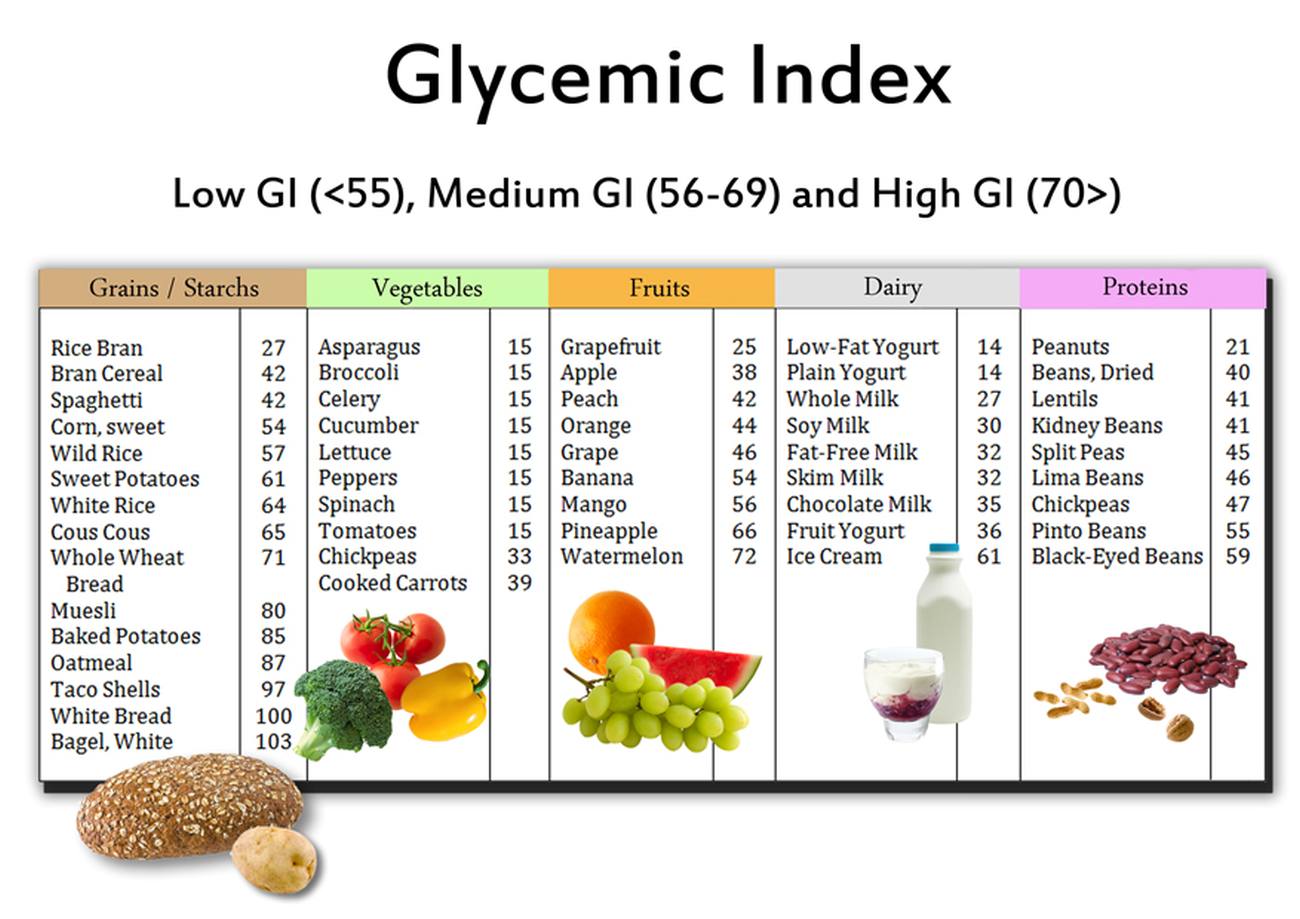
Image result for glycemic index food chart

Last October, the Pittsburgh Steeler’s quarterback Mason Rudolph was knocked unconscious by Baltimore Ravens safety Earl Thomas. It was a scary moment when Rudolph was face down on the field and not moving, but he eventually came to and was able to walk off under his own power.

But there are better ways to catch some shut-eye. If you’re having problems with your sleep cycle, try reducing the glycemic load of the carbs you’re eating.

According to a new study in the American Journal of Clinical Nutrition, eating refined grains and sweetened, starchy carbs with a high glycemic load delivers a sugar bomb to your bloodstream that can trigger transient and chronic insomnia, making it difficult to fall asleep or waking you up in the middle of the night. But, say the researchers who collected data from 50,000 participants in the Women’s Health Initiative, the good news is you can eat your way to better sleep!

They found that if you stick with high-fiber carbs from veggies, non-juice fruits, and 100% whole grains, it’s much easier to sleep soundly on a regular basis. Why does it make such a difference? One theory is that the spike and precipitous fall in blood sugar that can accompany eating refined carbs causes the body to secrete stress hormones that signal fight-or-flight, not goodnight.

So, check out the list of the top 10 high- and low-glycemic index foods at the table above. Then you can create a diet plan that delivers sweet dreams.

Can walking make you smarter?

As we learn a healthy weight and smaller waist size mean a more robust brain, and that a higher body mass index (BMI) and larger waist is associated with a thinning cerebral cortex — where thinking, seeing, and talking go on. Walking plus any exercise may help you feeling younger with sharp brain (read more below…)

For faster results you may add top supplements for METABOLISM SUPPORT – it will help regulate your metabolism to drop weight & use calories more efficiently: https://amzn.to/37dGkkc

Few folks can keep pace with 51-year-old, four-time Olympic gold medal race walker Robert Korzeniowski. After all, he’s won medals in the 20 km (12.4 miles) and 50 km (31 miles) race formats. But making sure your walking speed is moving along at a good clip when you’re a young adult and holding steady as you age is essential for overall physical and brain health.

A Duke University study found that slower-walking 45-year-olds display accelerated aging across multiple organ systems. According to another study, published in Scientific Reports, your endurance has a direct impact on your global cognition, even when you’re 25 to 30 years old.

A standard for good walking speed — and clear thinking — is 660 feet/220 yards (men) and 640 feet/213 yards (women) in two minutes. That’s about a 16 minute mile or around 4 miles an hour.

Want to pick up your pace? If you’re a slow walker, start out with a two-minute walk; see how far you can go. Each day, increase the distance and time, as you can. Try interval walking: Two minutes at your faster pace, five minutes slower; repeat.

Can you easily do a 16 minute mile? Stride with pride toward 10,000 steps daily. You will boost blood flow to your brain by 15%. Plus, any exercise — interval aerobics, cycling and swimming — turns on a gene in your muscles that produces a small protein (irisin) that crosses the blood/brain barrier. It allows your brain cells to produce a neurotrophic factor that makes your brain bigger and more proficient.

From Mehmet Oz, M.D. – the host of “The Dr. Oz Show,” and Mike Roizen, M.D. – Chief Wellness Officer and Chair of Wellness Institute at Cleveland Clinic. 

World Diabetes Day

Diabetes is a disease of civilization. About half a billion people on the planet are already sick, and in 10 years the figure will double. The disease is rapidly becoming younger, it cannot be cured, but it can be controlled.

At the Rock & Roll Hall of Fame induction ceremony this year, Def Leppard closed out their performance with their 1987 hit “Pour Some Sugar on Me.” Unfortunately, it seems like a lot of parents who grew up listening to that tune have taken that advice to heart when it comes to raising their kids. These days, sales of fruit drinks, juice and water-based products (think high fructose corn syrup) to children and toddlers totals almost $2.3 billion a year. Overall, 62% of children’s drink sales are for sweetened drinks.

According to the Centers for Disease Control and Prevention, childhood obesity rates range from 13.9% among 2- to 5-year-olds to 20.6% among 12- to 19-year-olds. That’s a health crisis, but it may not be the worst of it. Researchers at the University of Tennessee believe dietary habits learned by children 30 or 40 years ago could explain the adult obesity crisis now. So what’s down the road for today’s already-obese kids when they hit 50?

The American Academy of Pediatrics and the American Heart Association ask parents to restrict sugary beverages and want them to know that, according to researchers at the Rudd Center at the University of Connecticut, none of the 34 top-selling sweetened children’s drinks meet recommendations for healthy drinks for children.

So, keep a pitcher of fruited water available; fill up reusable water bottles with berries and water; and if your child wants a sugary beverage, read the label together and share info about why it may not be a healthy choice.

From Dr.Qz

COTREXIN® now makes it easy to support your heart health!Omega 3 Has Heart-Protective Superpowers

From Dr. Oz and Dr. Roizen, MDs

Researchers from Brigham and Women’s Hospital and Harvard Medical School looked at data from folks in the REDUCE-IT trial who had elevated triglycerides (150-499 mg/dL) and were taking a statin to prevent or control cardiovascular disease.

When participants were given 2 grams twice a day of the prescription EPA called icosapent ethyl, they saw their risk of a first heart attack plummet by 25%, second events by 32%, third events by 31%, and fourth or more events were cut nearly in half.

The EPA also prevented 1 in 5 cardiovascular-related deaths.

So if you have persistently elevated triglycerides, ask your doctor about icosapent ethyl. And everyone, with or without risks of heart disease, should enjoy EPA-rich salmon and ocean trout (and algae). Chinook salmon, for example, contains 1.01 grams (that’s 1,000 mg) of EPA per 3-ounce serving.

But don’t shortchange yourself on other forms of omega-3: DHA is also found in fish such as salmon, and ALA is in flaxseed, canola and soybean oil, nuts, and dark leafy veggies.

EPA, DHA, and ALA all help prevent or control high blood pressure, cardiovascular disease, arthritis, depression, cognitive dysfunction, and Type 2 diabetes.

DON’T BUY CoQ10 at a Drugstore!

Traditional CoQ10 is very poorly absorbed by the body. What’s more, many traditional CoQ10 supplements provide less than 200 mg a day of CoQ10, which is unlikely to deliver the cardiac benefits you’re counting on.

The reason for such poor absorption is because the coenzyme Q10 molecule is insoluble in water and soluble in oil.

The human body is up to 60% water. So most of the CoQ10 doesn’t dissolve in your body and is excreted in your urine. You literally flush it away.

Here’s some good news for men and women looking to support their heart health with CoQ10. To counter these absorption issues, researchers have developed an advanced nutrient delivery system. Among them Targeted supplements for the cardiovascular system:two most powerful heart nutrients, coenzyme Q10 and omega-3s, in a single daily supplement, also+added vitamin E, a powerful antioxidant.

This product, COTREXIN is an advanced nutritional supplement that uses the patented Bioperine delivery system to maximize the bioavailability and benefits of its key components.

The primary ingredient in COTREXIN is 200 mg of CoQ10 daily.

And thanks to Bioperine, COTREXIN’s CoQ10 is absorbed and utilized by the body up to 30% better than conventional coenzyme Q10.

Click on a link below to order COTREXIN and support your heart health in a most efficient way!

https://www.amazon.com/Medix-Select-Cotrexin-Day-Supply/dp/B00AZ3FSIG/ref=as_sl_pc_qf_sp_asin_til?tag=healthpass-20&linkCode=w00&linkId=34a904eb576564cfe39e8e1cca27182c&creativeASIN=B00AZ3FSIG

Excess Weight Damages Your Brain!

As inform us Dr. Oz and Dr. Roizen, MDs – a healthy weight and smaller waist size mean a more robust brain, and that a higher body mass index (BMI) and larger waist is associated with a thinning cerebral cortex — where thinking, seeing, and talking go on. MRI scans of study participants’ brains revealed that every unit increase in BMI was associated with a measurable decrease in the thickness of the brain cortex.
For obese people, the thinning was pretty dramatic — especially in those younger than 65. Their brain aging was accelerated by at least a decade. https://nws.mx/30uId8l

So to stay smart and aim for a healthy weight, one of the options-
New Weight Loss offer for 2019!
The Red Tea Detox
We offer here a New Weight Loss Phenomenon – the fully tested product – The Red Tea Detox. Start it now and see impressive result just in 2 weeks!

CLICK HERE TO GET YOUR DISCOUNT NOW! https://aliya12_redteax.pay.clickbank.net/?cbitems=2.1&cbskin=20480&cbfid=39534&cbexit=58

BRAIN FUNCTION BOOSTING with NeuroActiv6

http://www.naturalcell.com/go.php?offer=aliya12&pid=1&tid=

NeuroActiv6 appeals to: Aging baby boomers looking to stay mentally young
– Men and Women experiencing brain fog
– Athletes looking for a ‘mental edge’
– Professionals, moms, and students who want to be more productive, focused, and energized throughout the day.
– Men and women looking to improve their conversations or presentation skills

Keep your Brain SHARP! Click on link above to get your discount now!

HerbsPro – Herbal sup

Organix-South is committed to promoting organic, fairly traded and ethically wild-crafted herbal dietary supplements and protective body care products. Organix-South’s mission is to create wholesome and natural products while taking care of the planet. Herbspro.com is proud to carry the entire range of this fine brand.

Organix South
Organix South
Organix South

Organix South Additional 5% off on this Organix South.